In honor of the one-year anniversary of our Tiny Forests Together Program on April 1st, we asked our social media followers an important question: what do you want to know about Tiny Forests? For the last two weeks, we’ve been collecting your Tiny Forest questions, and today we’re sharing our responses.
Questions could be about anything Tiny Forest related: from the costs and challenges, to the maintenance and upkeep that comes after planting day, or even the science and evidence we use to make decisions – everything was fair game!
Thank you to everyone who submitted – your questions, comments, and concerns offer valuable insight as we work ensure that our programming truly serves the communities we are working in. Now, without further ado – here are our answers!
“How much space does a Tiny Forest need?”
The minimum requirement for a Tiny Forest is only 4m x 4m (a total area of 16m2 – roughly equivalent to the size of a parking space). Our Base of Operations is home to a 16m2 Tiny Forest, affectionately dubbed “The Tiniest Tiny Forest”. However, most Tiny Forests are between 150-200m2.
“How many Tiny Forests has FCF planted?”
As of April 2026, FCF has been involved in the planting of 21 Tiny Forests throughout the National Capital Region. A map showing the locations of all of our projects can be found here, with Tiny Forest sites marked on the map in blue.
“How long does it take to plant a Tiny Forest?”
The planting of trees into a Tiny Forest is usually, with the help of community volunteers, completed in just one day; however, site preparation begins long before that. According to the Miyawaki method, the site should sit for a period of 4-6 months prior to planting to allow the amendments to decompose and fortify the soil. If you are planning on a fall planting, you should apply the amendments in spring and let it sit until fall. If you are planning on a spring planting, you should apply the amendments in the fall before, and allow them to sit over winter. Good things take time, and this is no exception!
“What kinds of trees are in a Tiny Forest?”
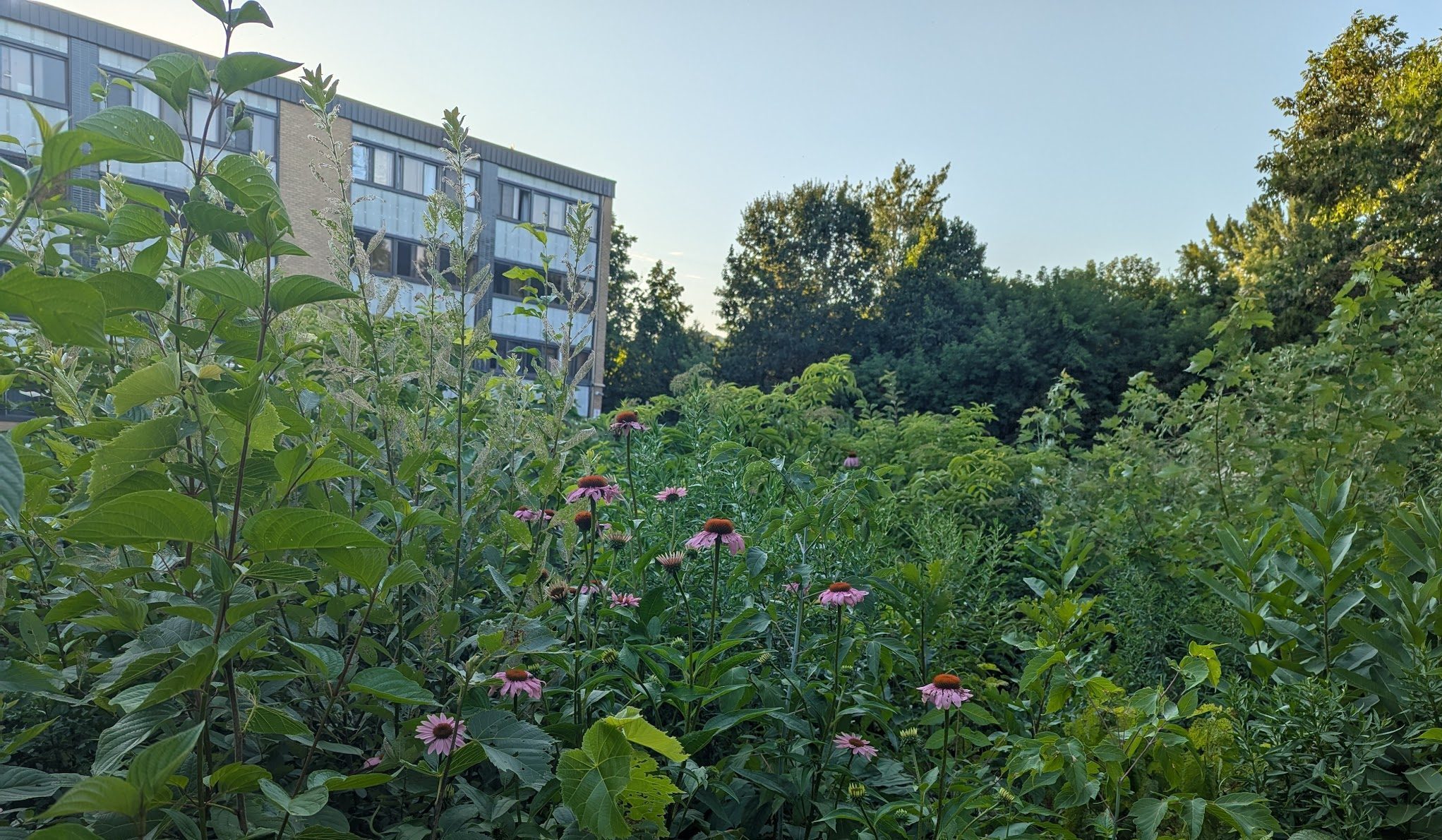
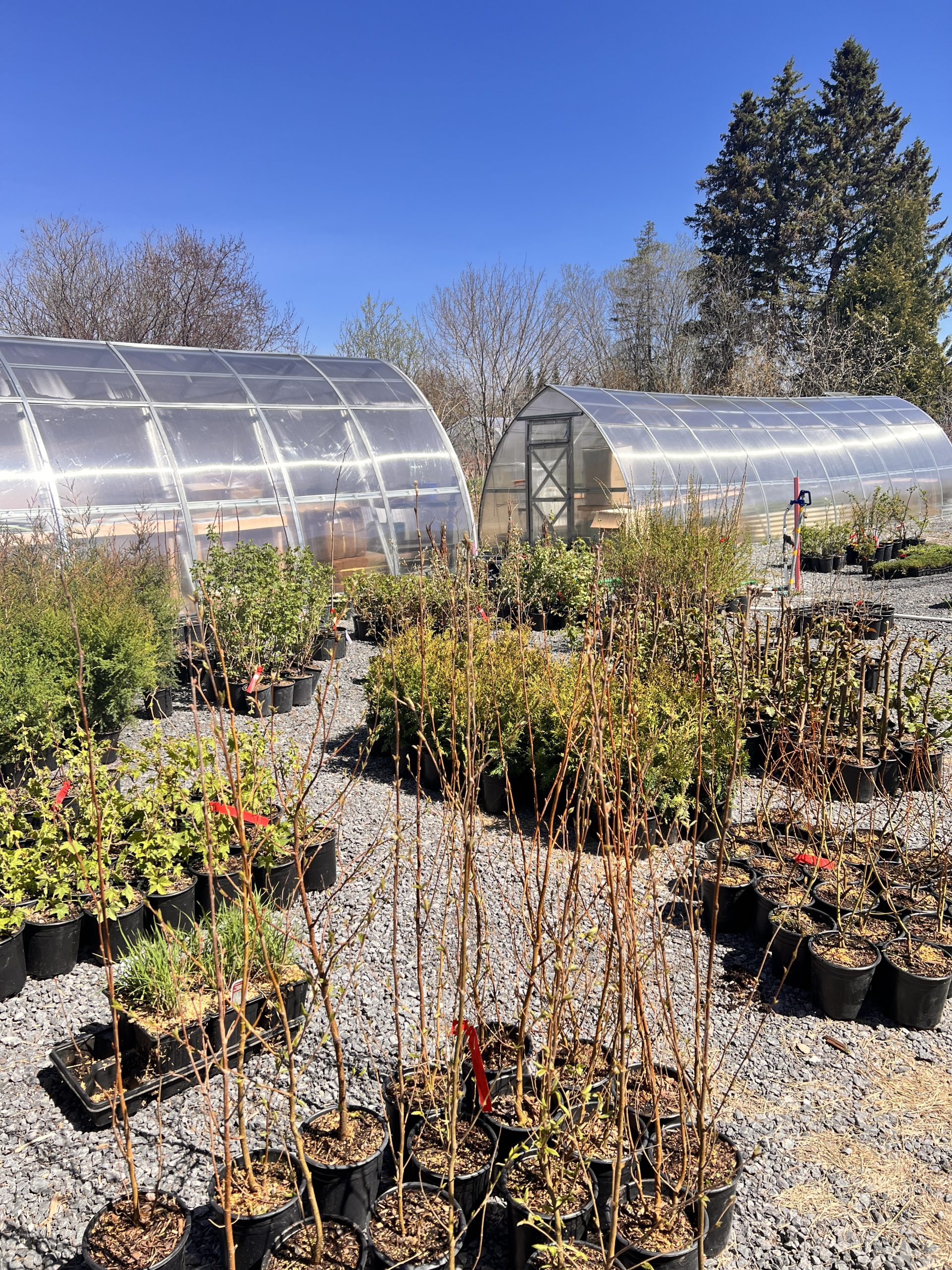
The short answer to this question is that when planting a Tiny Forest in Ottawa, we prioritize the planting of trees and shrubs native to the region. Common examples would include deciduous trees such as maple (e.g. silver, red, and sugar maple); birch (yellow, grey, and paper), and oak (e.g. white, burr, and Northern red); we also plant conifers like tamarack, white spruce, and red pine, along with shrubs like red osier dogwood, swamp rose, and speckled alder.
The long answer to this question is – it depends! One of the first steps in planting a Tiny Forest is a field survey, where we collect information about the site and make a list of the native tree and shrub species either a) already growing in the immediate area, or b) if there is no vegetation to observe, commonly found in your region. Because we are trying to recreate a full ecosystem, a variety of heights (e.g. overstory species (greater than 10m mature height), understory species (10m < 2 m) and forest floor species (less than 2m) should all be represented. Soil conditions, moisture levels, and other site-specific info should also be incorporated into species selection.
Still curious about the species selection process? Check out FCF’s Guide to Tiny Forests, which includes several sample species lists for Eastern Ontario, or head to our Tiny Forest Dashboard for an overview of each site.
“Do you use trees/shrubs with nuts or berries that humans can enjoy?”
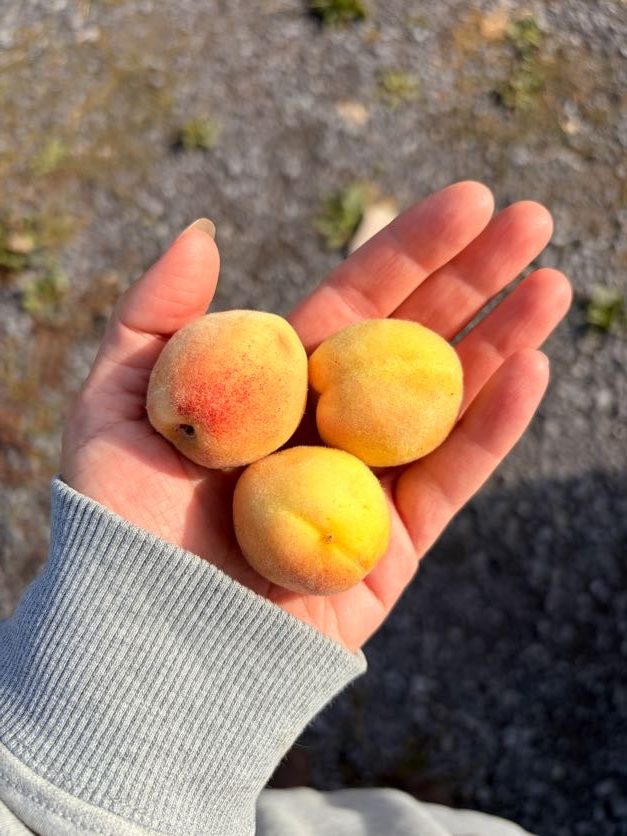
In several instances, when planning a Tiny Forest planting, communities have requested that their Tiny Forest include what we refer to as an “edible fringe”: this is generally made up of trees and shrubs with edible fruit, nuts, and berries, located near the edge of the forest for easier harvesting and better light availability once the forest begins to fill out. Examples of edible species in our plantings include various types of apple and pear trees, hazelnuts, strawberries, raspberries, several varieties of currants, and many more.
These types of requests are important to us: in addition to making sure a Tiny Forest is resilient and ecologically sound, we also strive to meet the desires and needs of the communities they are placed in.
“How are you choosing locations for these forests?”
One of the most important aspects of our selection process is long-term community support. In their applications, groups are asked to propose site(s) that align with their project goals, consider local hotspots of beneficiaries, and engage with the landowners early to identify any potential concerns. The more technical aspects come in later – starting with these considerations helps build shared investment in the project from the outset.
Equity is also an important part of our project selection criteria: projects located in both short- and long-term action areas identified in the City of Ottawa’s Tree Equity Study may be prioritized for Tiny Forest plantings.
Once a project is selected, we then perform site visits to determine site suitability, considering factors such as size, soil conditions, moisture levels, and sunlight. If approved, the process moves into the stage of securing land access permissions.
There’s a lot that goes into it, but each step helps set both the forest and the community up for long-term success.
“Why plant trees so densely? Doesn’t that create competition?”
Competition is actually a key mechanism of the Miyawaki method! Planting with higher density encourages trees to grow upward quickly as they compete for light. This helps the forest establish faster, and theoretically creates a layered, natural structure in a shorter time.
“Why all the focus on soil preparation?”
In urban environments, soil is often poor quality, especially in the upper layers most important for tree growth, and highly compacted from frequent use. As such, Miyawaki emphasized the importance of preparing and amending soil to provide conditions that mimic a high-quality natural environment. This is achieved through decompaction and the addition of various amendments prior to planting.
Want to read more about how and why we prepare the soil in our Tiny Forests? Check out our blog post and fact sheet on the subject!
“What kinds of stewardship activities happen at a Tiny Forest?”
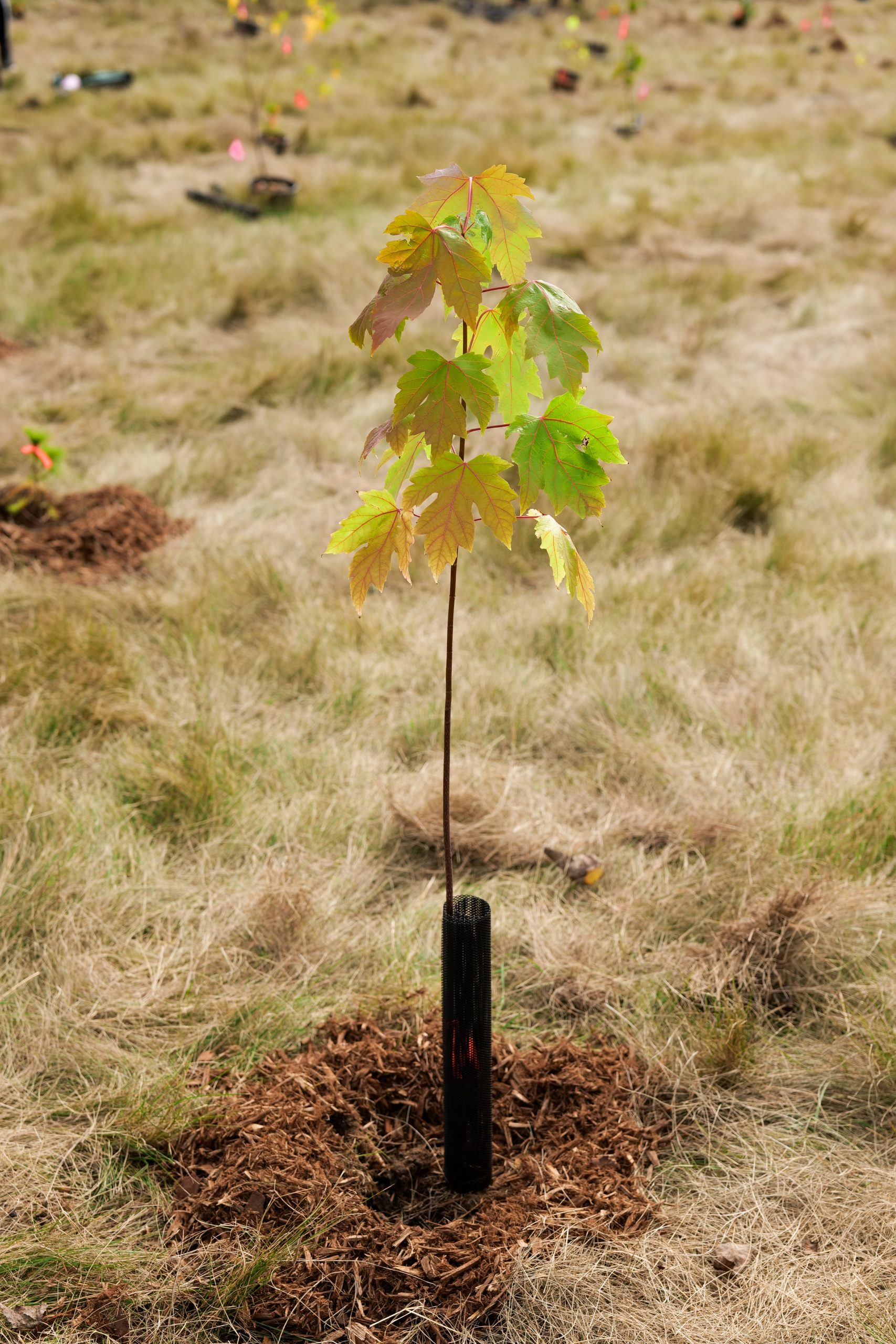
Planting a Tiny Forest is no small task – but the work doesn’t end once the trees are in the ground! Newly planted trees and plants are vulnerable to transplant shock due to moving from one environment (e.g. a nursery pot) to another (e.g. the ground). Routine maintenance helps the plants become established and ensure the best chances of survival. This includes tasks such as the following:
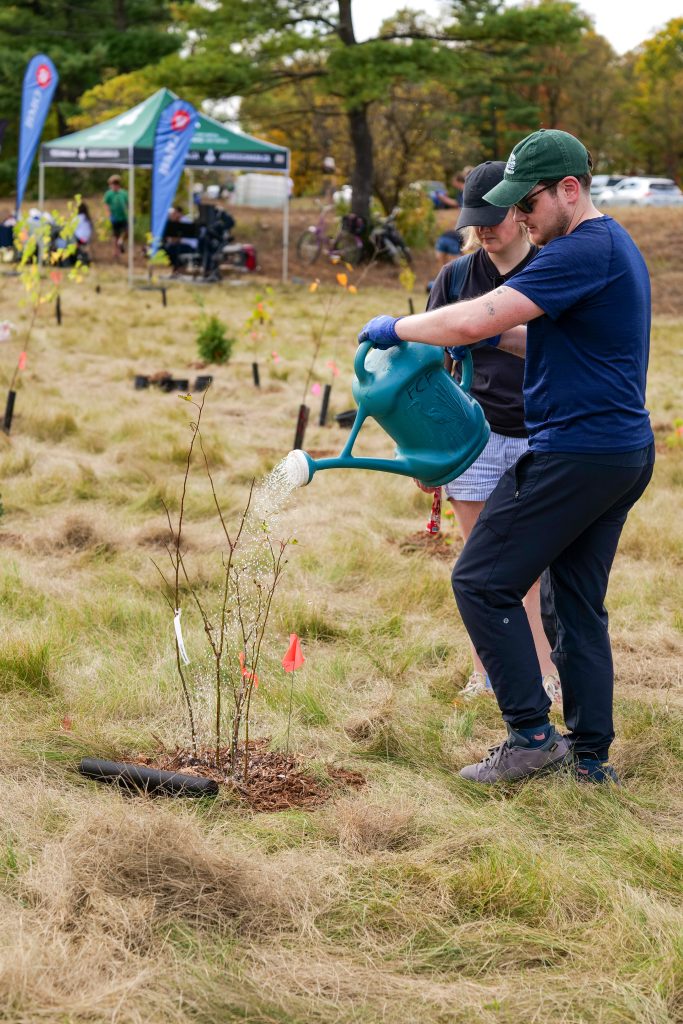
- Watering: Minimum once a week during the growing season (approximately April to November) and with increased frequency during heat waves
- Weeding: Remove weeds from the site at a minimum of twice per year. You can weed every 8 weeks during the growing season.
- Mulching: As your Tiny Forest grows, you should reapply mulch to any bare areas to maintain moisture retention and insulation.
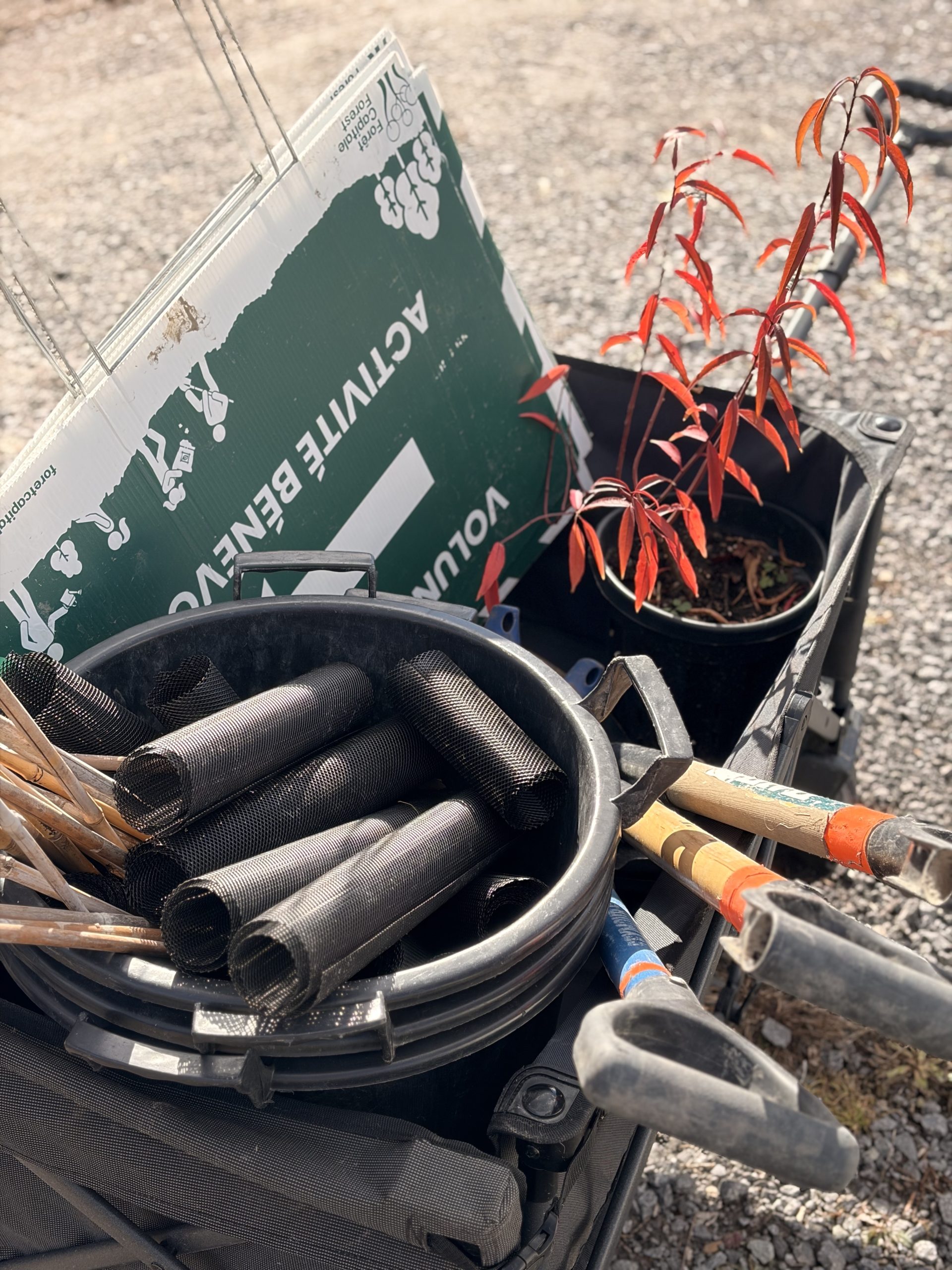
- Tree Protection: It is recommended to apply tree guards to tree stems near the end of the growing season (late September-November) to prevent grazing from animals over winter; these should then be removed in the spring.
- General maintenance: Removing litter, monitoring for fencing or tree damage, watching for disease or animal browsing
The Miyawaki Method suggests a maintenance period of two to three years post-planting, after which it can be considered as being within the “free-to-grow” stage.
“I’m interested in this, but I don’t have land to offer. How can I get involved?”
You don’t need land to contribute to your local Tiny Forests! There are lots of ways to make a positive impact – you could join our volunteer stewardship program, make a donation, or sponsor a tree planting event!
Our volunteers support both planting days and ongoing stewardship activities like watering, mulching, and site care -especially in the first few years while the forests are still establishing. Volunteering with FCF offers opportunities to get hands-on experience planting and caring for trees, and to contribute directly to the success of these sites. If you’re interested, you can sign up for our volunteer mailing list or check out our events calendar for information on upcoming opportunities*.
*Note: we have several updates for our stewardship program currently in the works, so keep an eye out for those shortly!
“What funding is available if a group is interested in planting a Tiny Forest?”
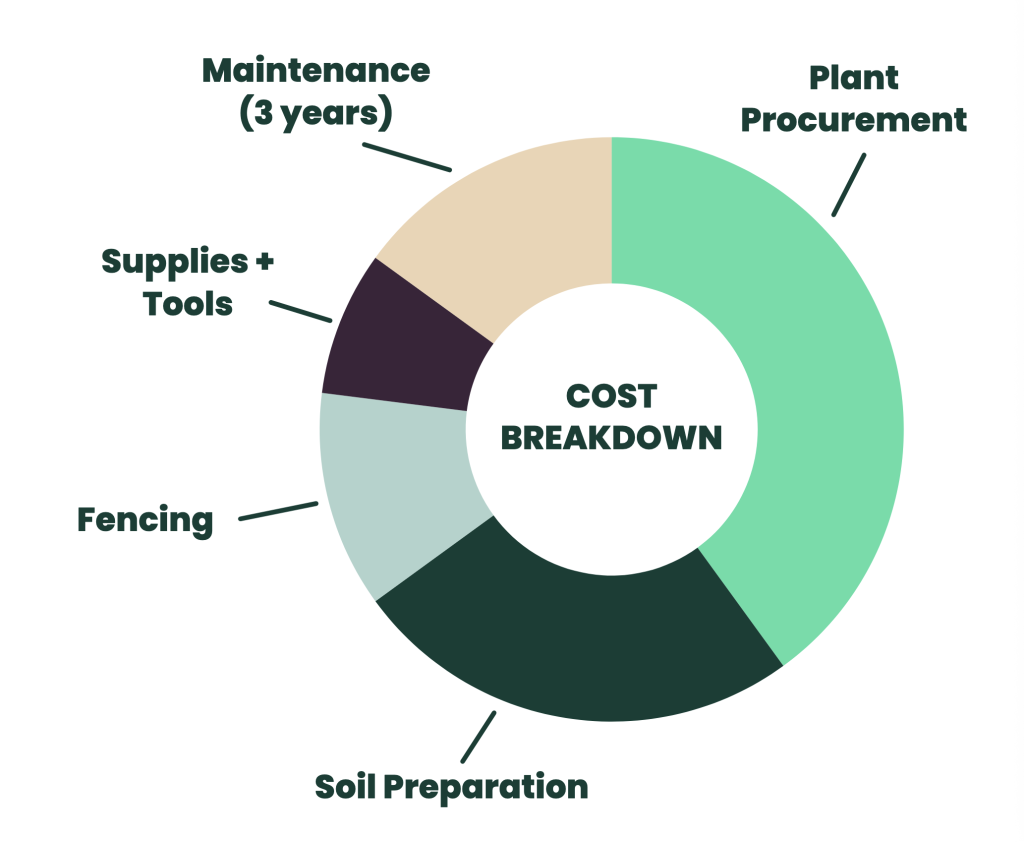
The total costs of planting a Tiny Forest can vary drastically based on the size, site conditions, and the amount of in-kind support on offer. On average, a Tiny Forest will cost $100-$200 per square metre. Beyond fundraising (e.g. bake sales, crowdfunding, silent auctions) and sponsorships from local and corporate businesses, there are also grant programs available specifically for community greening initiatives like this.
Here are a few examples of grant programs used for Tiny Forests in the past:
- City of Ottawa – Community Environmental Projects Grant Program: Provides funding to community groups and non-profit organizations interested in undertaking small-scale, community-based initiatives that support an environmentally sustainable Ottawa.
- Tree Canada – Treemendous Communities Grant: Supports community groups and non-profit organizations in community tree planting projects.
- South Nation Conservation Authority – Community Environmental Grant: Provides funding to Non-Profit organizations, community groups and municipalities for plantings or community events.
“I heard about a Tiny Forests being planted at [school name]. Do the kids get to help with these school plantings? What do they learn?”
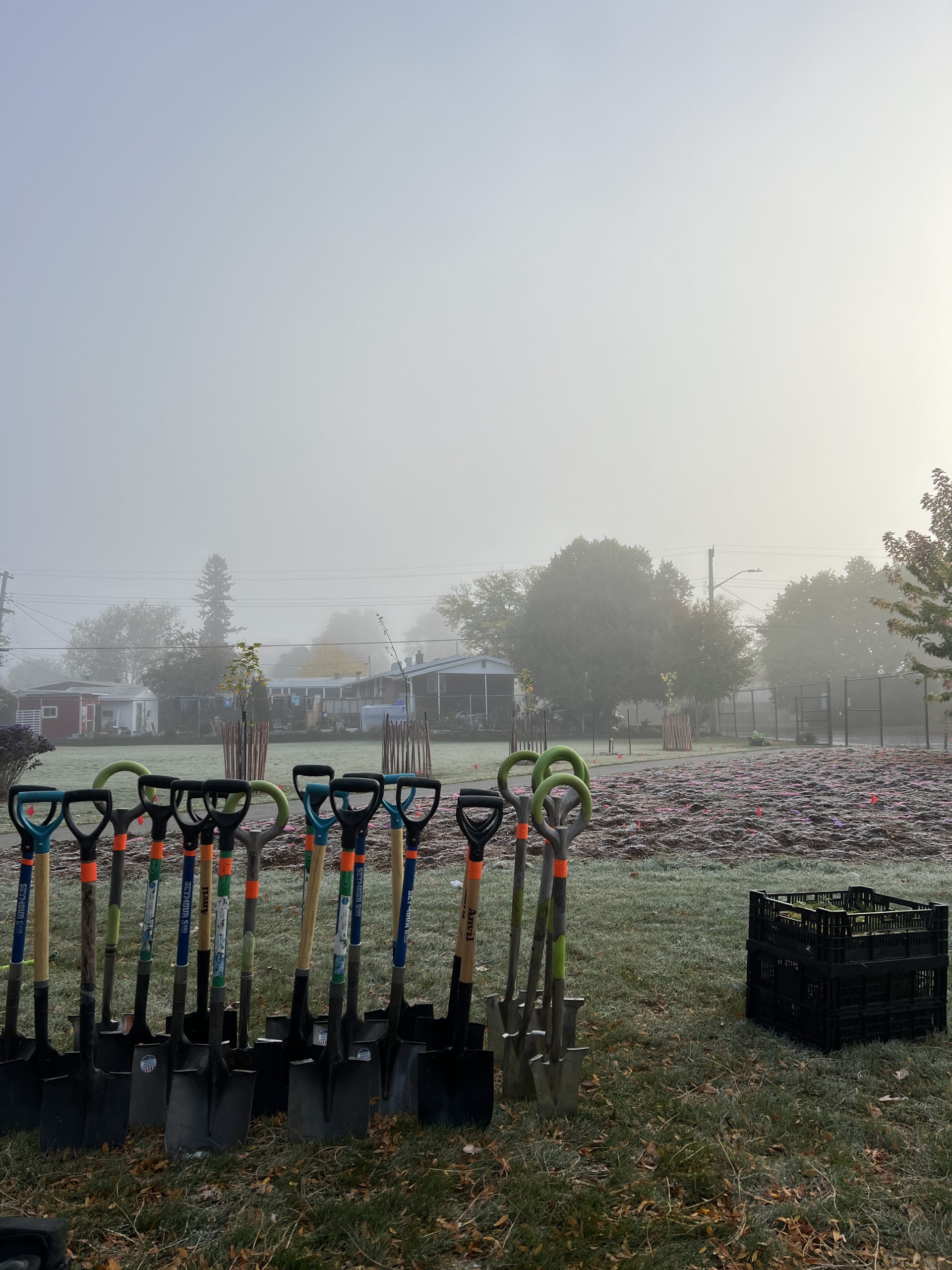
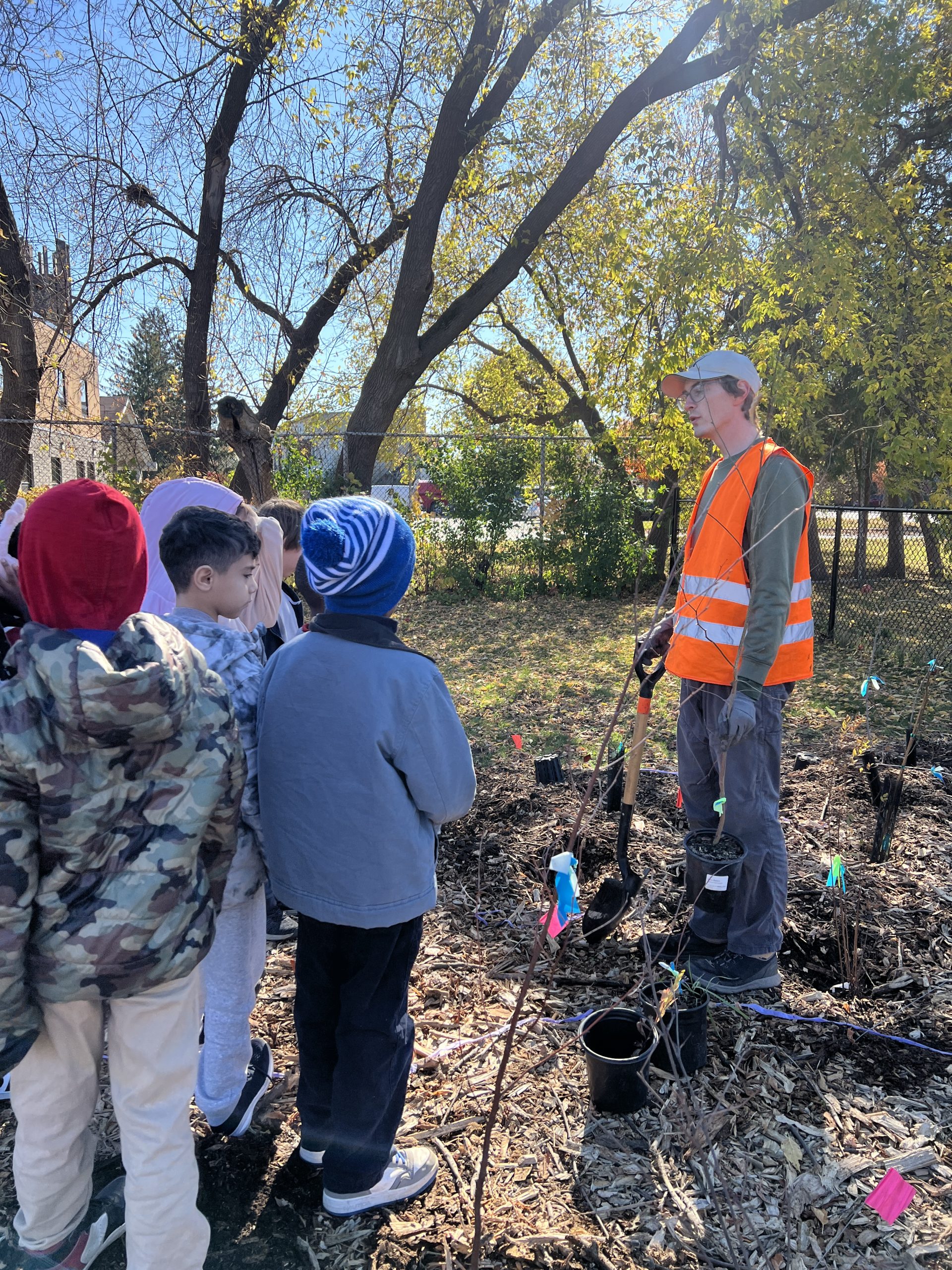
Alongside EnviroCentre and with support from the Josette Robertson and Joan Johnston Family Foundation, FCF has planted Tiny Forests in several schools across Ottawa. These plantings are designed to actively include students of all ages through instructions, demonstrations, and hands-on experience.
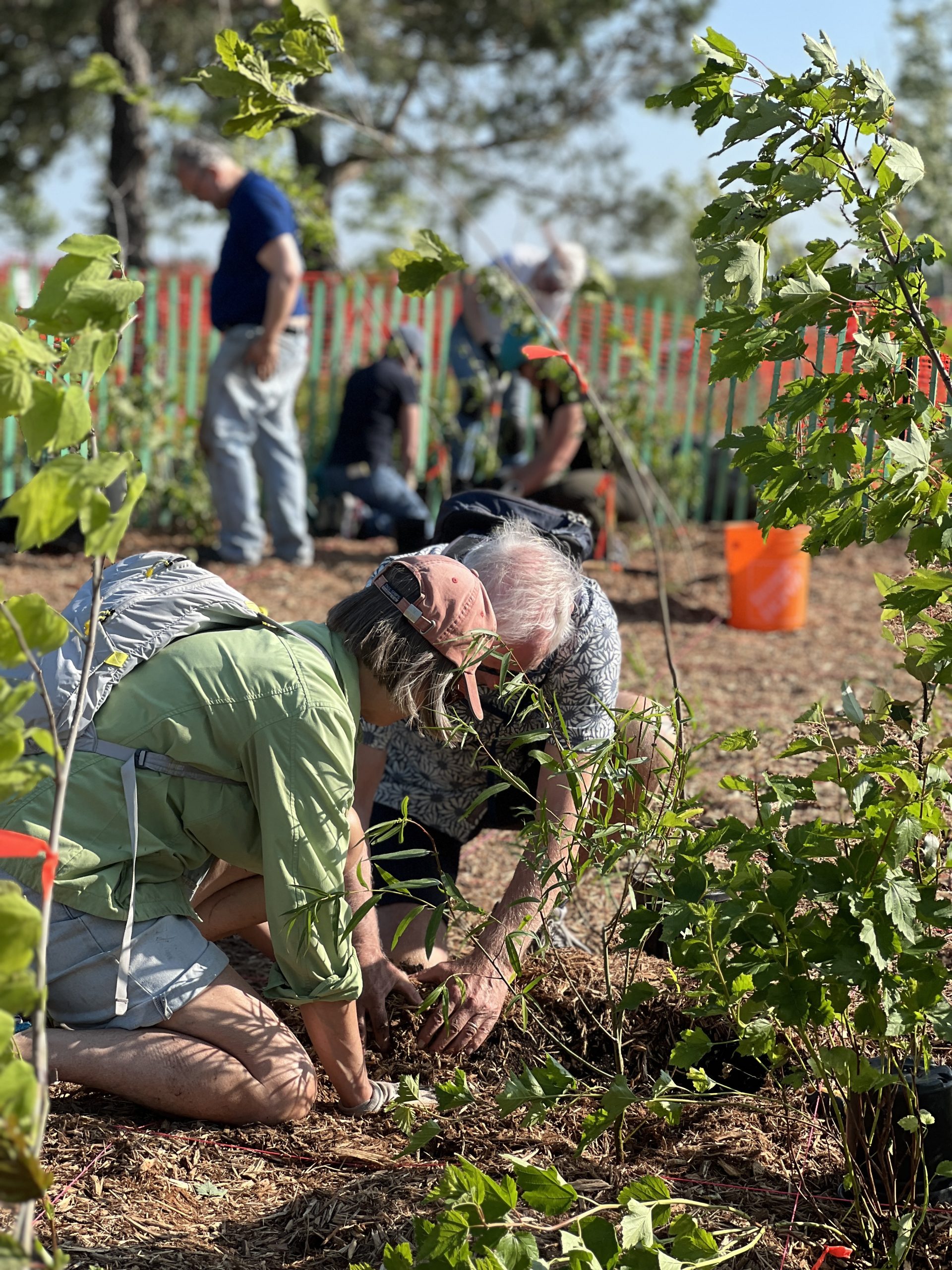
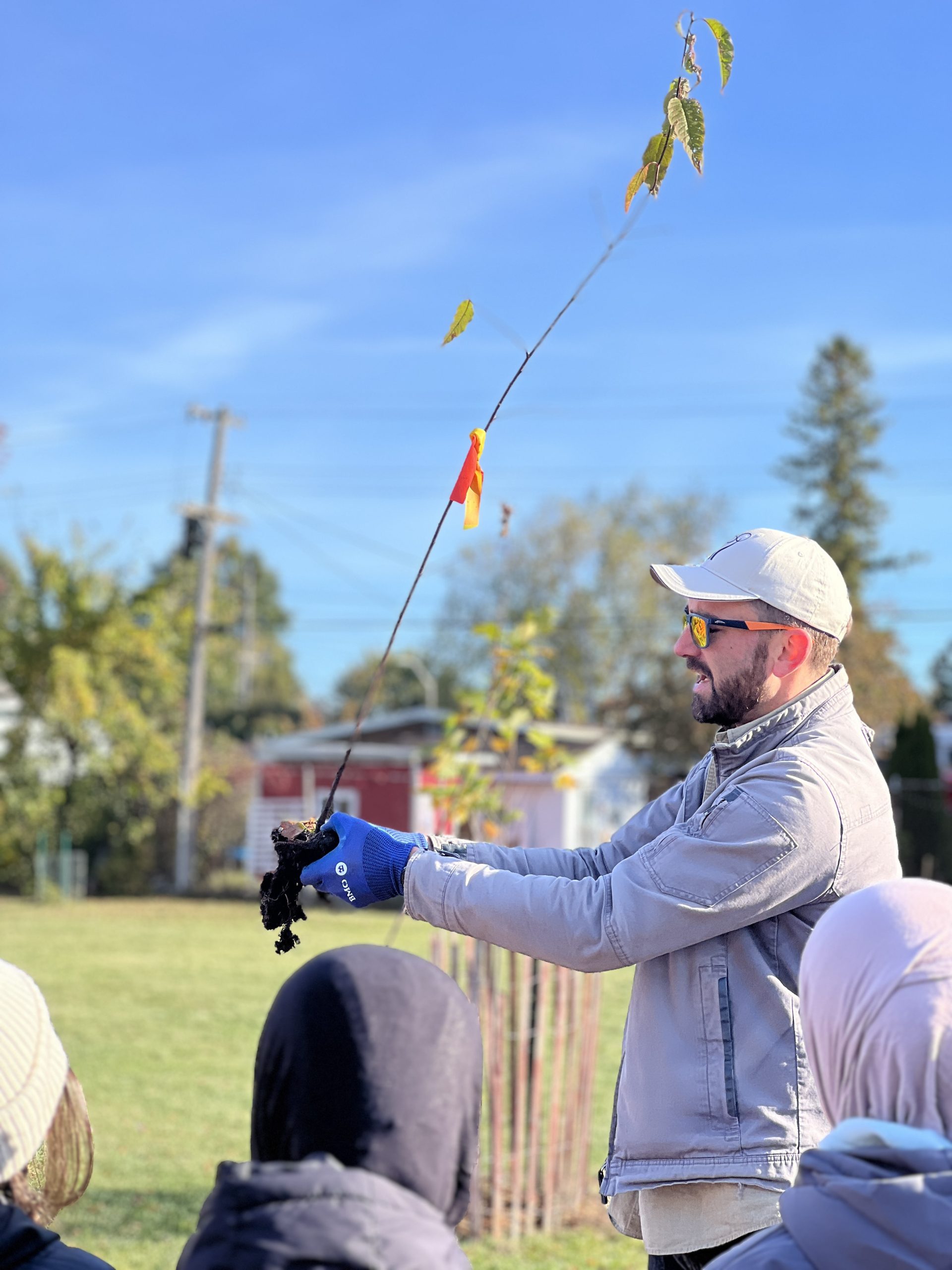
We usually begin by showing each group how to safely use a shovel, how to properly plant a tree, and how to care for it after planting. From there, students take part in planting, mulching, and watering the site.
Beyond the physical work, students learn about local ecosystems, biodiversity, and the role they can play in caring for green spaces in their own communities. In many cases, it’s their first time planting a tree, so it’s very exciting for us to get to be a part of that! The Tiny Forest can also be used as an ongoing learning space, with opportunities to connect to curriculum topics in science and environmental studies.
“What does this look like in the longer term? Who is responsible for upkeep and maintenance?”
After planting, stewardship responsibility gradually transitions to the community, with ongoing support from Forêt Capitale Forest. We provide a detailed maintenance plan, along with seasonal check-ins, technical advice, and group training to support best practices.
Tiny Forests require a minimum of three years of active care to ensure successful establishment. During this time, maintenance typically involves 2–5 hours per month (April–October) and can be shared among community members and groups. Local partners commit to tasks like watering, weeding, and placing/removing tree guards.
Participating groups also help track the forest’s progress by documenting growth and survival rates and reporting annually to FCF. In turn, FCF maintains a dashboard to track plantings across sites and shares updates on progress and impact.
Over time, as the forest becomes more established, it requires less active maintenance and becomes increasingly self-sustaining. Throughout the process, we continue to work with partners to support the site and celebrate milestones along the way.