
Why is forest stewardship important?
FCF is guided by an Afforestation Plan that prioritizes the care and maintenance of newly planted trees until they reach maturity. This commitment to forest stewardship is what sets FCF apart: planting trees is a meaningful and visible act of restoration, but it is only the first step in a much longer process. The long-term success of a site depends on ongoing care and maintenance after planting, helping young trees to survive, adapt, and thrive in often challenging urban environments.
Beyond the forest itself, it also fosters something less visible, but equally important: a connection between people and the places they help care for. Through repeated visits, hands-on work, and seasonal engagement with sites, stewardship helps build familiarity, responsibility, and a sense of shared ownership of local green spaces.
As a growing environmental charity, we rely on our dedicated volunteers to carry this work forward with us. We are deeply grateful for the time, care, and commitment that they contribute to sustaining these young forests as they grow.
How can I get involved in stewardship with FCF?
Participate in a Stewardship Workshop
These workshops are designed to build both skills and confidence as an urban forest steward. Ideal for students wanting hands-on field experience, volunteers looking to get more involved, and anyone interested in supporting Ottawa’s growing green spaces.
Sign up to be a Core Volunteer
Looking for opportunities that go beyond public events? Core Volunteers receive regular hands-on opportunities to support site stewardship, including watering, weeding, and maintenance, as well as additional updates and training throughout the season.
Steward on your own time
(and submit a tree care report!)
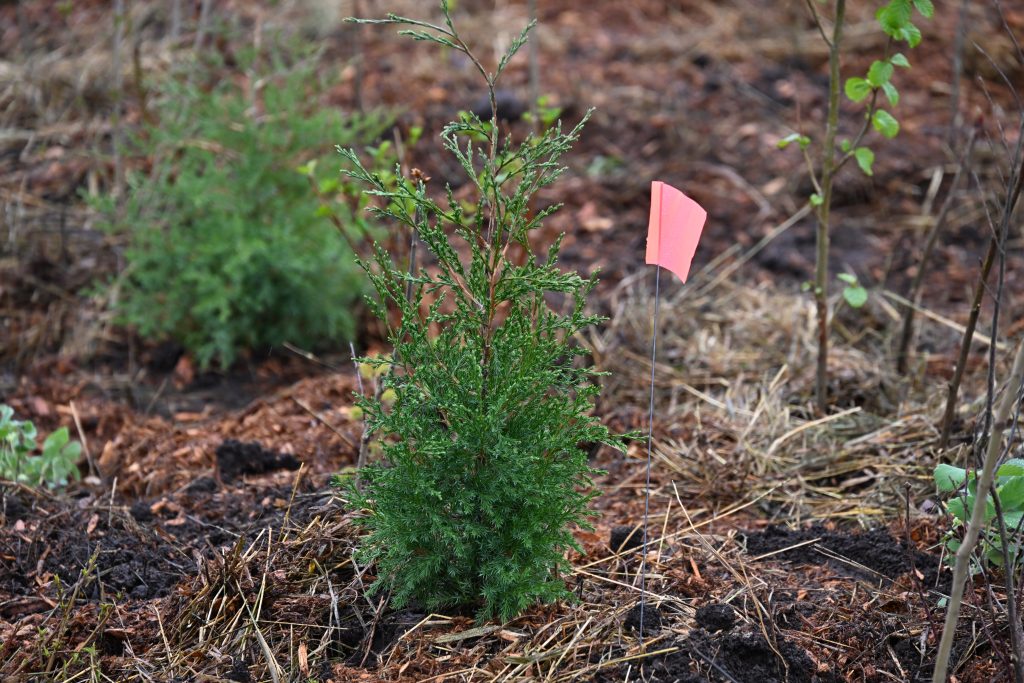
If you visit an FCF site, please submit a tree care report to provide us with up-to-date information on the health of the trees. These reports provide the data we rely on to guide our maintenance decisions, and support the long-term survival of these young forests.
What stewardship actions do volunteers perform?
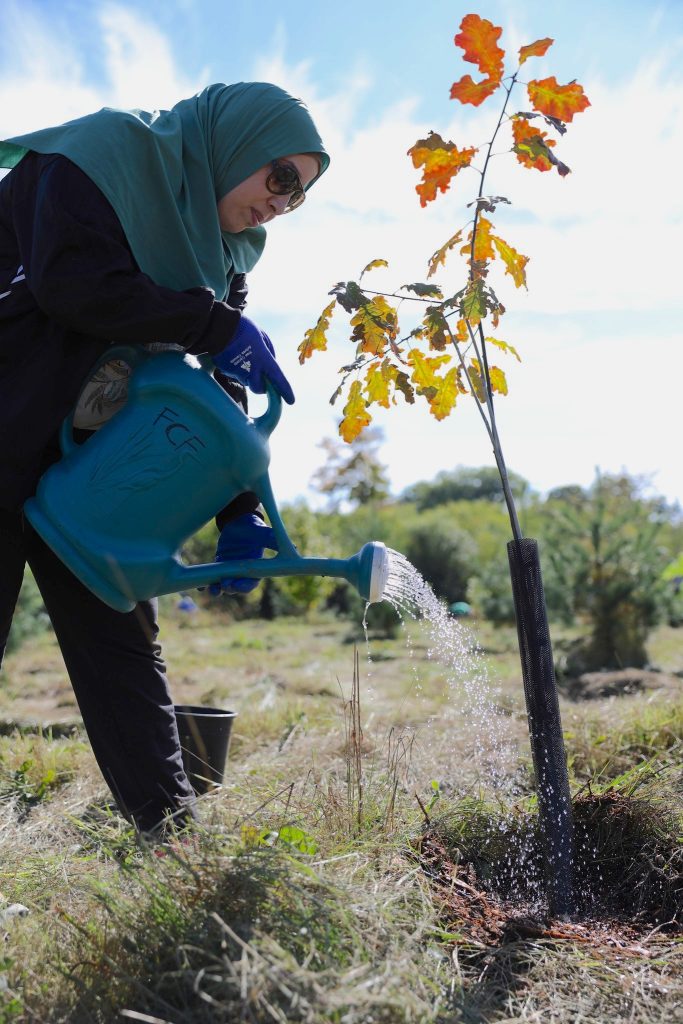
Watering
Young forests are vulnerable to transplant shock and heat stress. Watering is essential during the first few years of establishment to keep the root system and surrounding soil moist. During periods of extreme heat and drought, the demand for water increases even more. Our volunteer stewards help water trees and watch for signs of heat stress and drought.
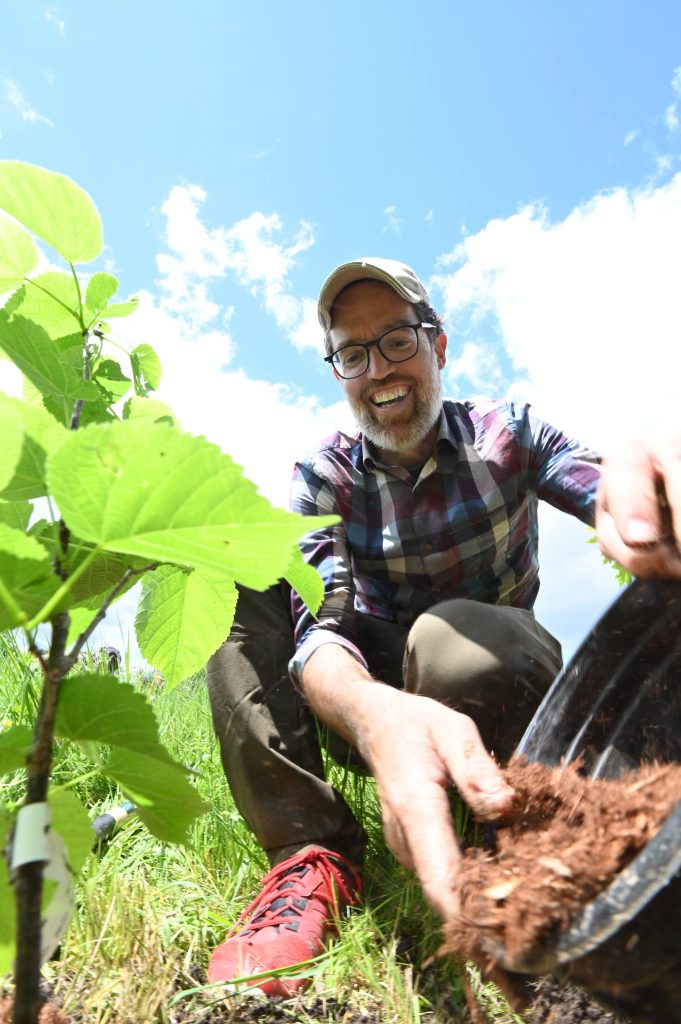
Mulching
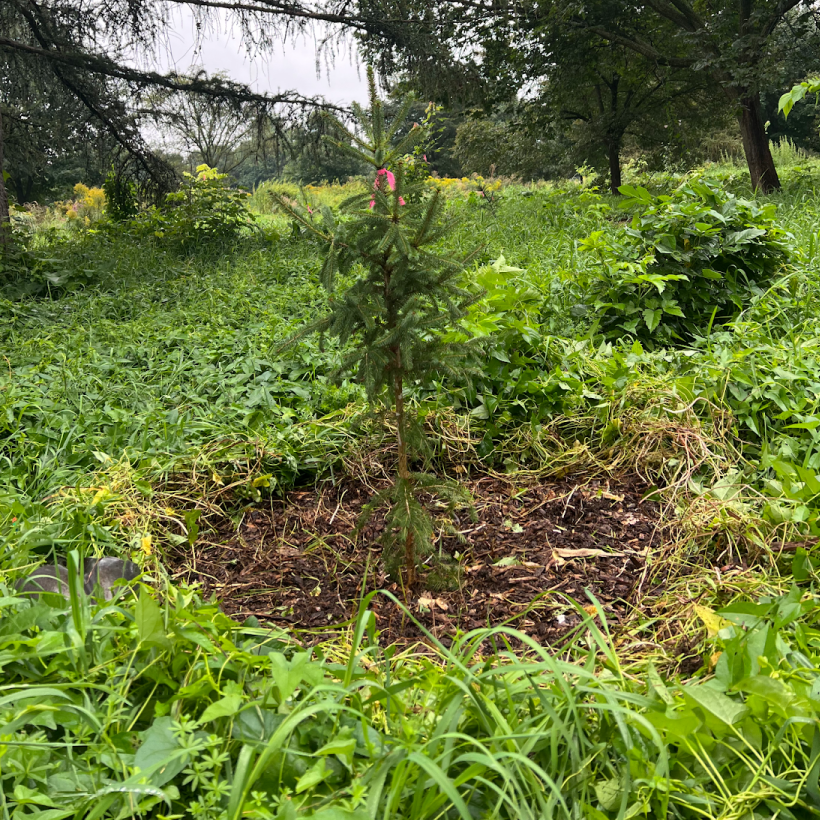
Applying mulch to the base of the tree is a useful strategy to retain moisture in the soil surrounding the root system, limit the growth of competing weeds and grass, and insulate the root system from temperature fluctuations. Stewards ensure a sufficient layer of mulch is applied in a ring around planted trees, while ensuring it is not touching the stem to prevent rotting.
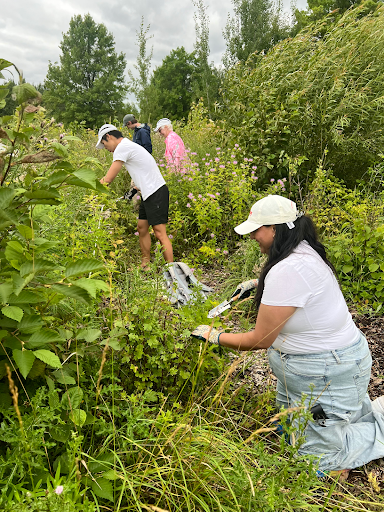
Weeding
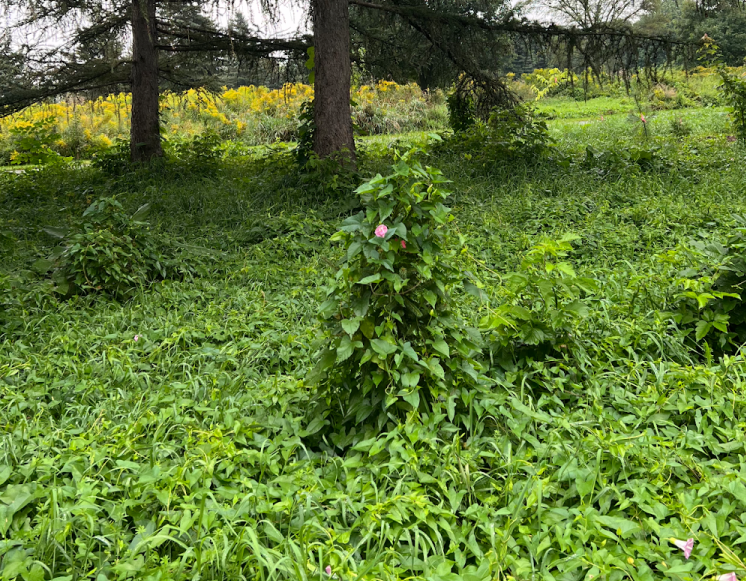
One of our most common tree care activities is removing surrounding weeds and grass that compete with trees for nutrients, water and sunlight. While mulching initially suppresses the growth of weeds and grasses, new and regrown plants may outcompete small trees 1-2 years after mulching. Depending on the type of plant and stage of maturity, Stewards may remove the competing vegetation by manually pulling out a plant’s entire root system, or implementing the “chop-and-drop” method.
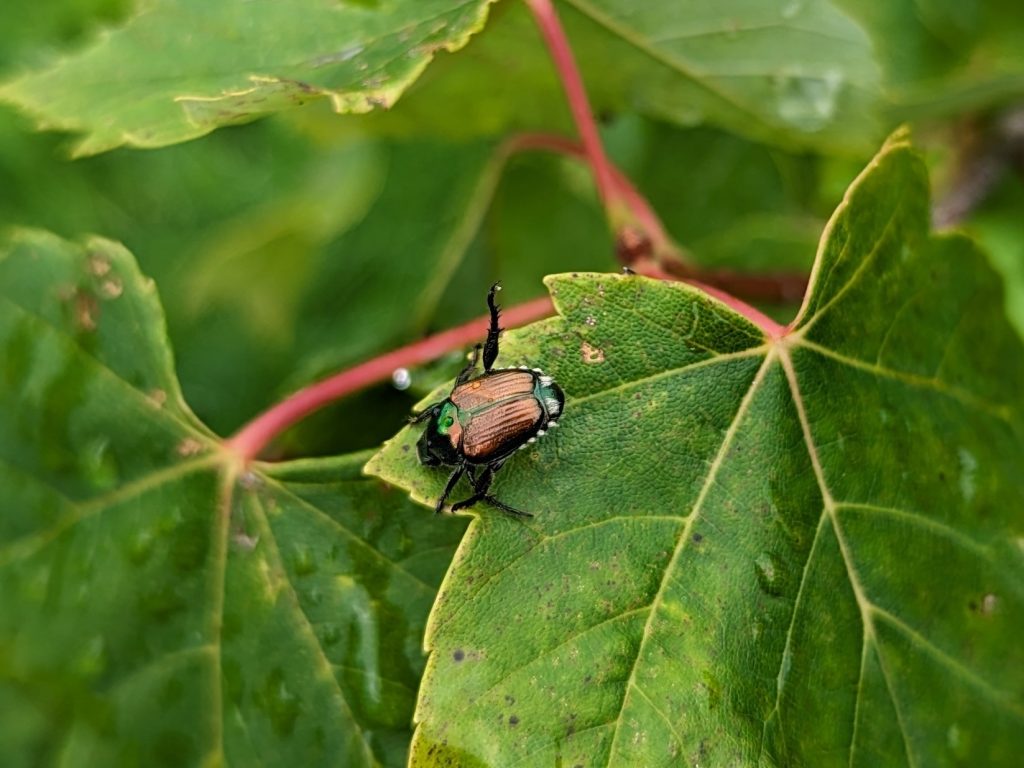
Removing invasive species
Invasive species are insects, plants and animals that are not native to the region we are planting in. As a result, they can quickly overtake a newly cleared site and outcompete or harm native trees. Stewards are taught how to remove invasive forest pests, like Japanese beetles that browse on foliage.
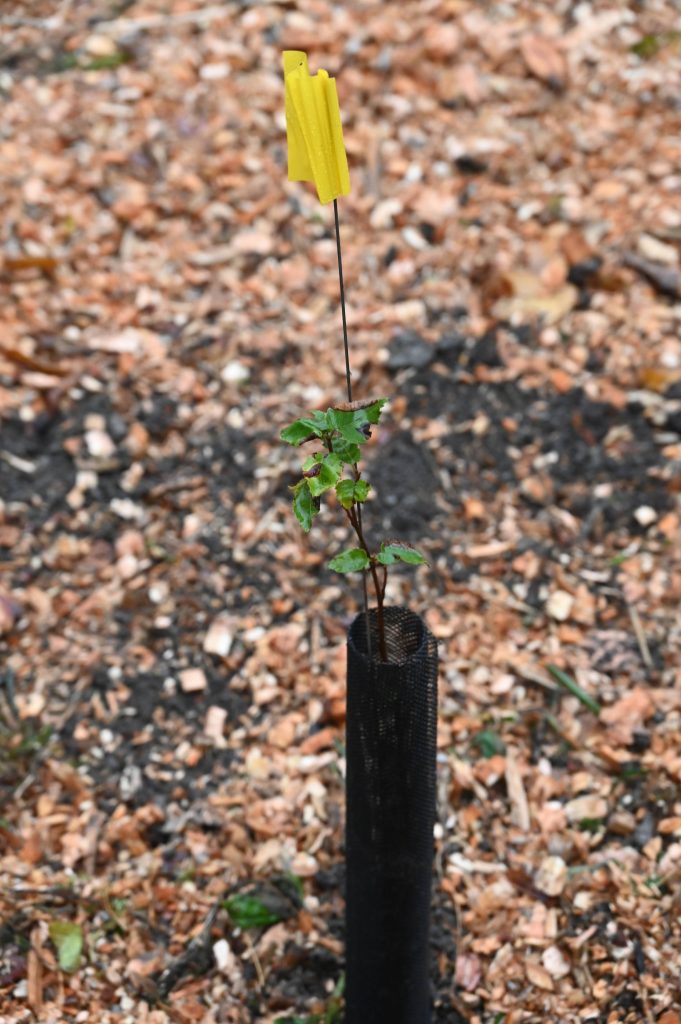
Protecting trees from browsing animals
Young trees and shrubs are susceptible to browsing from animals throughout the year. Deer browse on new buds and foliage throughout the growing season while rabbits and other rodents eat away at the bark throughout winter. Placing guards around the base of trees and applying deer and rabbit repellent can help protect trees from potential browsing. Stewards participate in placing tree guards on trees in autumn and removing them in early spring.
Become a forest steward
Want to learn more? Join our Casual Volunteer mailing list for quarterly newsletters and monthly updates on upcoming volunteer events.
For more frequent updates and hands-on opportunities, consider joining our Core Volunteer crew!
We aim to reach an 85% survival rate for our community tree planting projects!
FCF is dedicated to stewarding the new urban forests we plant alongside our community volunteers. There are many challenges trees face when planted in urban areas such as high pollution levels, excess heat, drought, increased risk of disease, and exposure to pests and invasive species. However, the social, economic, and ecological benefits that urban forests bring to communities are undeniable. With communities as our priority, we have set a goal that goes above the industry standard.