
What is a Tiny Forest?
Tiny Forests can be employed as an efficient and effective way to increase access to green spaces, especially in smaller urban areas.
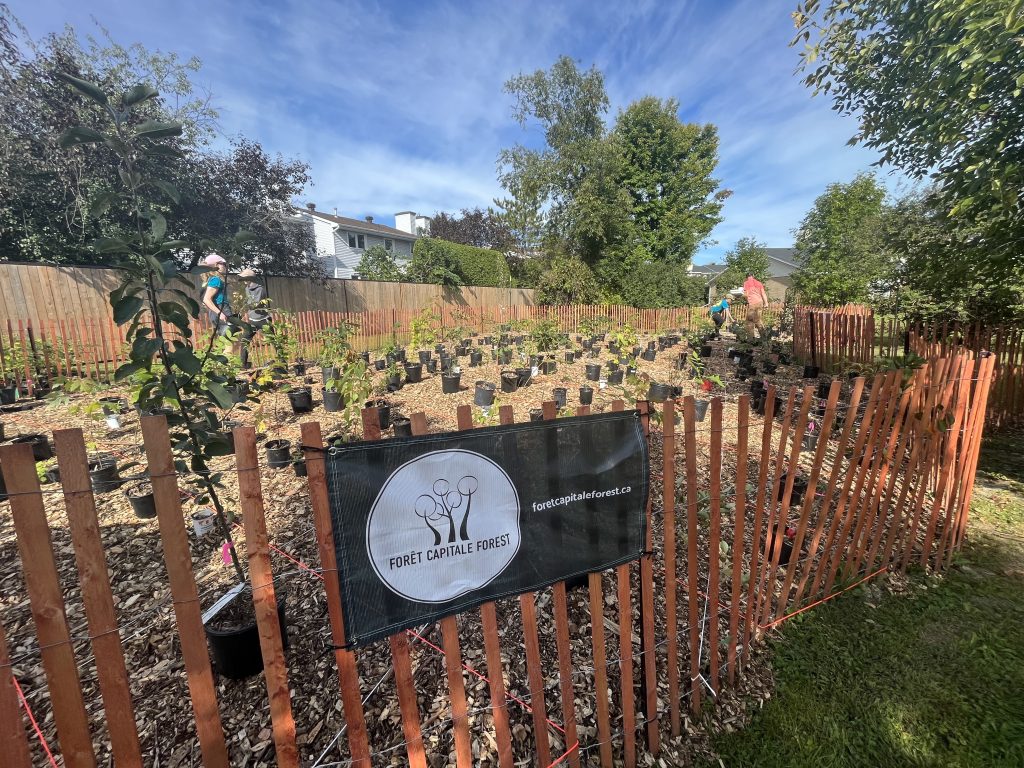
Tiny Forests are planted using the Miyawaki Method, which involves densely planting a variety of native species in amended soil. Species are selected based on local conditions and consist of all the layers you see in a natural forest: canopy trees, understory trees and shrubs, and forest floor perennials or grasses. They require only a 4 metre by 4 metre space, but most are between 150-200 square metres.
Tiny Forests by Forêt Capitale Forest
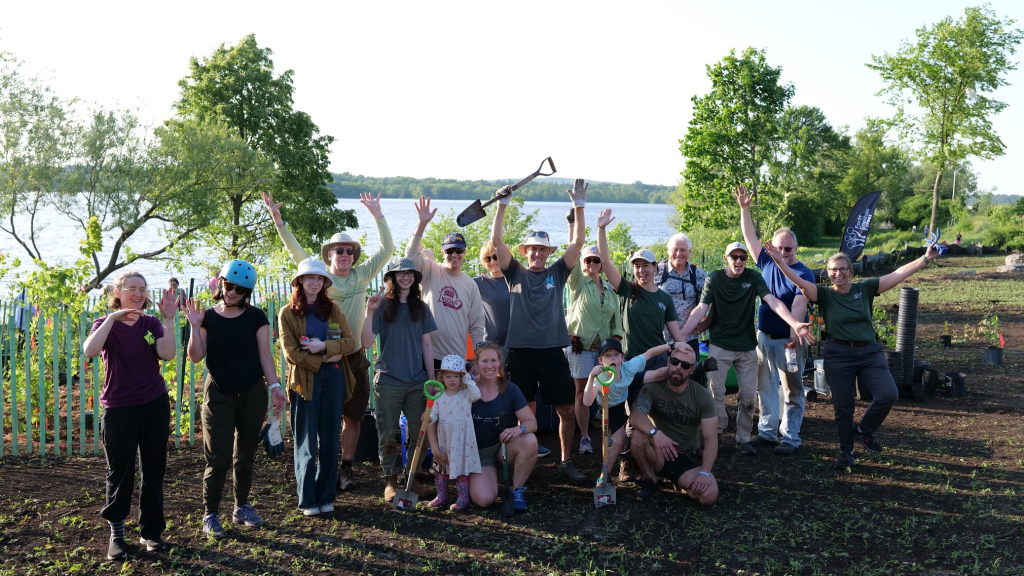
Forêt Capitale Forest plants Tiny Forests on public and privately-owned land in the National Capital Region (Ottawa, ON and Gatineau, QC). We take pride in planting and caring for Tiny Forests alongside the community.
In 2025, we launched a pilot program called Tiny Forests Together that helps bring community-led Tiny Forest projects to life. Click the links below to explore opportunities with FCF and see our impact.
A Deep Dive into the Miyawaki Method
The Miyawaki Method is a forest planting method created by Japanese botanist Akira Miyawaki that aims to help restore native ecosystems by accelerating the natural vegetation succession process. The method is characterized by amending the soil with natural and organic materials to replicate the soil composition of a mature forest, planting a wide range of native or naturalized species, and planting multiple canopy layers of mature forest (i.e., overstory, understory, forest floor).
Interested in planting a tiny forest? Apply through our Tiny Forest Together program if you are a community group, or contact us at info@foretcapitaleforest.ca if you are a landowner or individual.