Tiny forests planted using the Miyawaki method can quickly transform small urban spaces into pockets of biodiversity and climate resilience. However, their success is built from the ground up (literally!), hinging on a set of critical steps that are often overlooked: assessing, preparing, and amending your soil.
Why and how do we amend soil?
In the context of urban forestry projects, poor soil quality is frequently a key limiting factor in tree growth. Soil health has a direct impact on the health of the plant life being supported by it; when soil is healthy, study observations generally include increased crop yields, faster establishment, reduced runoff, better nutrient stores, and increased resilience, along with an increased capacity to perform a wide variety of vital ecosystem services. The two uppermost layers of soil, the organic layer and the topsoil layer, are both the most important for tree growth and the most likely to be limited or removed entirely during urban development. Another common issue is soil compaction as a result of foot and vehicle traffic, construction, and continuous use. As such, the Miyawaki method emphasizes the importance of preparing and amending soil to provide conditions that mimic a high-quality natural environment.
Decompaction
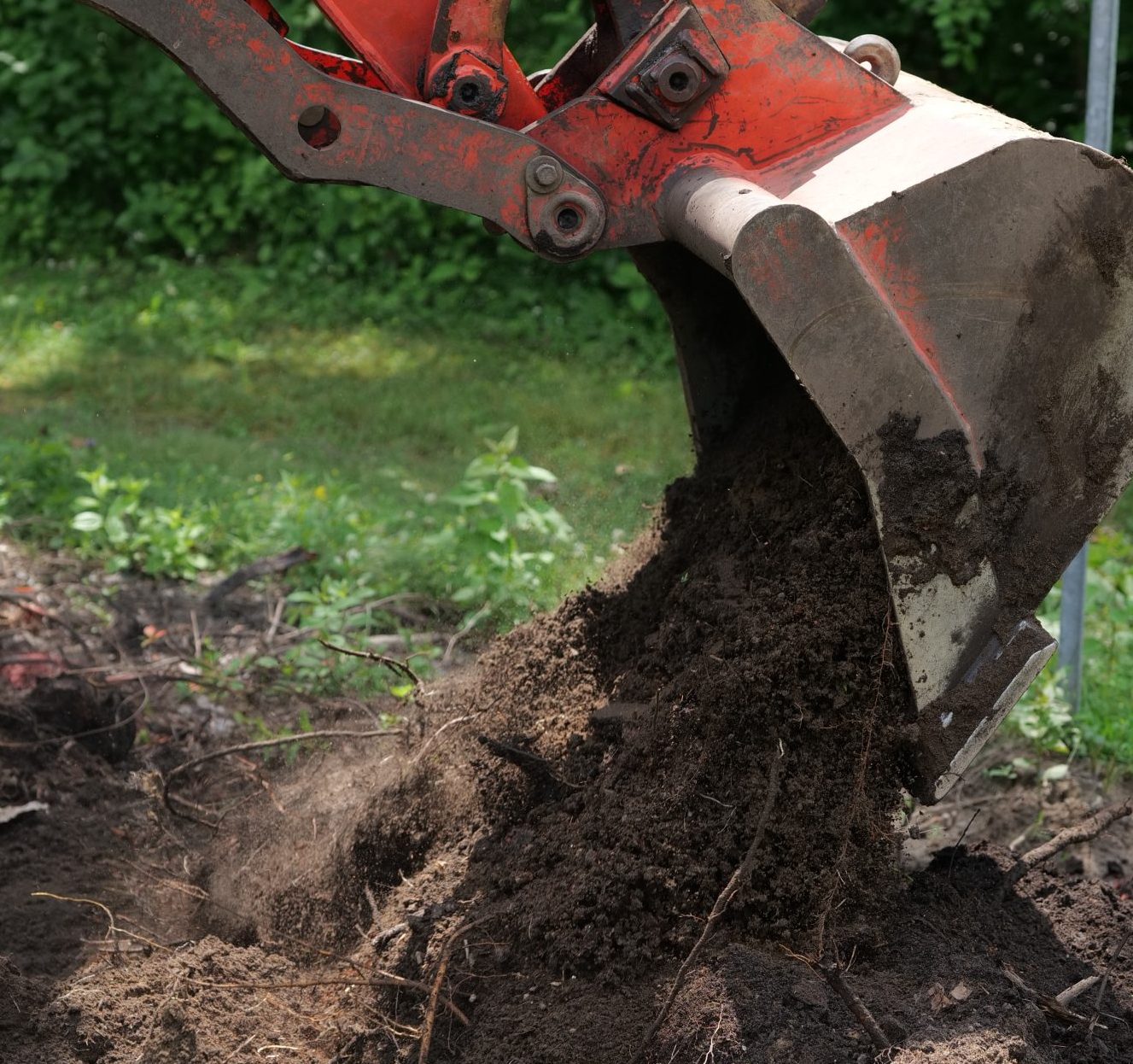
The first step is decompaction, generally achieved by excavating and mixing the soil. While this disturbance isn’t necessarily ideal, it provides an efficient and effective way to make compacted and degraded sites a more hospitable environment for young trees. This loosening process increases how quickly rainwater penetrates the ground, allows tree roots to grow deeper and more stable, and improves oxygen availability. Evidence from a Tiny Forest monitoring report from Earthwatch UK showed that water infiltration rates increased and soil compaction decreased in Tiny Forest plots compared to surrounding land; in addition to being indicators of overall soil health, these benefits also reduce the risk of urban flooding and tree loss during drought. In comparison, soil compaction is known to negatively impact overall soil health across a number of different indicators, such as decreasing soil biodiversity and tree growth speeds.
Amendments
After decompaction, soil amendments should be mixed in to improve overall soil quality. In order to do this effectively, you need to have an understanding of what your baselines are. The type of amendments will be based on your site conditions, local availability, and project budget. Generally, we recommend incorporating at least one amendment from each of the following categories:
- Aeration: Breaks up compacted soils to improve drainage, structure, and gas exchange
- Nutrients: Mimics the nutrients found in a natural forest floor
- Moisture retention: helps to prevent drought conditions
- Soil microbiome: create conditions and inoculate to jump-start a healthy and biodiverse ecosystem of beneficial microorganisms
In addition to these mix-in amendments, we also recommend an untreated and undyed mulch layer for weed suppression, insulation, and moisture retention. Mulching reduces plant competition and frost damage, while keeping the soil cool and moist for beneficial soil microorganisms. These living organisms play a crucial role in the sequestration of carbon, which both improves growing conditions for young trees and contributes to long-term carbon storage.
Soil type (generally categorized using relative percentages of sand, silt and clay textures found within the soil) plays an important role in determining what amendments might be needed to increase the likelihood of success. Every site is unique, and the amendments we choose will reflect that. To learn more about the kinds of soil amendments we use, check out our fact sheet here.
Benefits of amending soil
In the aforementioned Earthwatch UK Tiny Forest monitoring report, it was found that plots with fewer or less intensive soil amendments had significantly slower growth than the Tiny Forests that had full amendments performed. Faster, denser growth generally bodes well for ecosystem services, too. Dense, diverse plantings in well-prepped soil have been shown to capture more carbon than monocultures; preliminary data from the Vineland Mini Forest project supports this in a Canadian and Tiny Forest-specific context. On top of all of this, initial soil preparation has been shown to continually improve overall soil health over time, with positive knock-on effects for the entire urban ecosystem.
FCF’s approach to Tiny Forests
Critiques of the Miyawaki method often focus less on efficacy and more on high upfront cost; this is in spite of evidence showing significantly better long-term cost effectiveness (i.e. cost per alive tree) than in more traditional urban plantings. Because soil amendment and preparation are often the most time and resource-heavy stages of the process, they are frequently targeted as opportunities to reduce total costs, either by minimizing or skipping these steps entirely. Unfortunately, this can also have the unintended effect of undermining tree growth and survival, risking giving Tiny Forest projects an undeserved reputation of falling short of expectations. At FCF, we believe that thoughtful, evidence-based soil preparation is not optional when planting Tiny Forests: it’s a foundational step that directly influences long-term success.
Demonstration plots
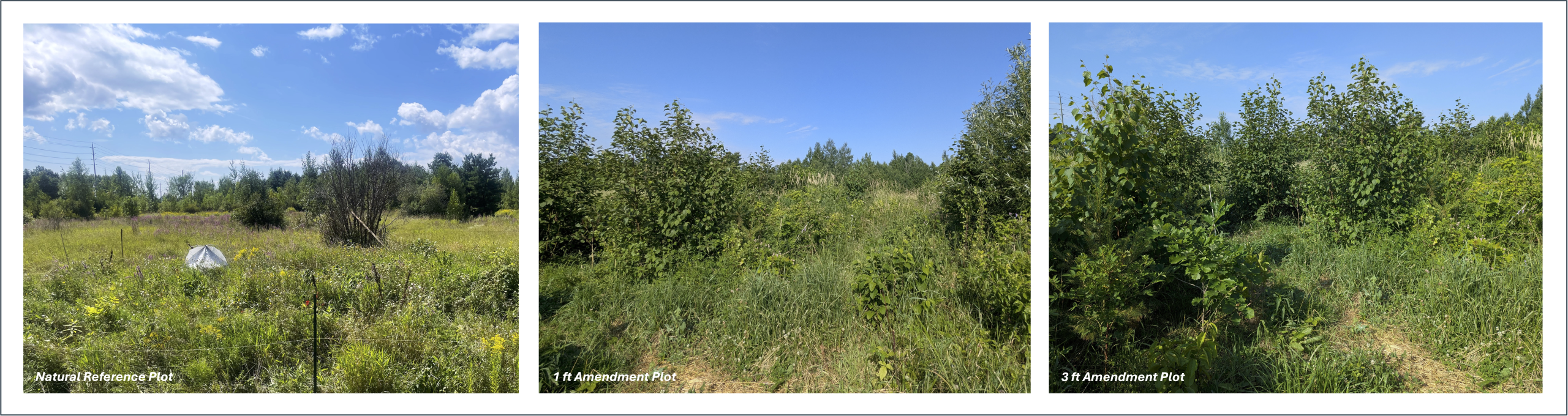
To better understand the difference soil amendments can make, FCF established a series of three Tiny Forest Demonstration plots at the Base of Operations in early 2022: one unplanted reference plot with no amendments, one planted with 1 ft–deep soil preparation, and one planted to the full 3 ft (1 m) depth recommended by the Miyawaki method. These plots comprise a living experiment showing how soil conditions influence the growth potential of the trees planted within. While this evidence is anecdotal, there are visible differences between each plot, with increased soil amendment depths visually corresponding to increases in tree growth and forest establishment.
Biodiversity study
In order to quantify and verify what we think we’re seeing, FCF has undertaken a multi-year biodiversity study to scientifically differentiate these demonstration plots. This project was generously funded by the Josette Robertson and Joan Johnston Foundation and undertaken in partnership with the University of Guelph’s Centre for Biodiversity Genomics. The methodology involves the comparison of metabarcoded insect samples and soil samples from the 2 differently prepared sites, as well as the unprepped and unplanted reference plot. Preliminary results from the first year of this study (2023) indicated higher insect biomass at both amended plots versus the control plot. Samples collected throughout May-Oct of 2024 and 2025 are currently undergoing analysis.
In the long term, we hope to demonstrate whether there are measurable differences in biodiversity as a result of these variations in soil amendment depth. This will allow us to make informed decisions about the most efficient soil prep approach moving forward.
Does that mean FCF applies the complete Miyawaki soil preparation (i.e. always excavating to 3’) to every Tiny Forest we put in?
Well, no… not necessarily. We assess each site individually, and evaluate how the site functions as a system individually and on a larger scale. In some circumstances, we can honour the Miyawaki method while making a few exceptions, if it serves the project.
For example, when preparing our Tiny Forest at Jacques Cartier Park, we built up 2-3 feet of soil rather than excavating due to pre-existing soil contamination at the site, meeting the need for an amended topsoil layer without potentially compromising human health.
On the opposite end of the spectrum, the sites at Westboro Beach and Collège La Cité first required excavation to remove the deep root system of invasive European Buckthorn. As such, we were less strict about the specific depth and instead took advantage of that excavation period to add amendments rather than digging a second time. In all cases, thoughtful soil preparation allowed us to stay true to the spirit of the Miyawaki method while adapting to site-specific conditions.
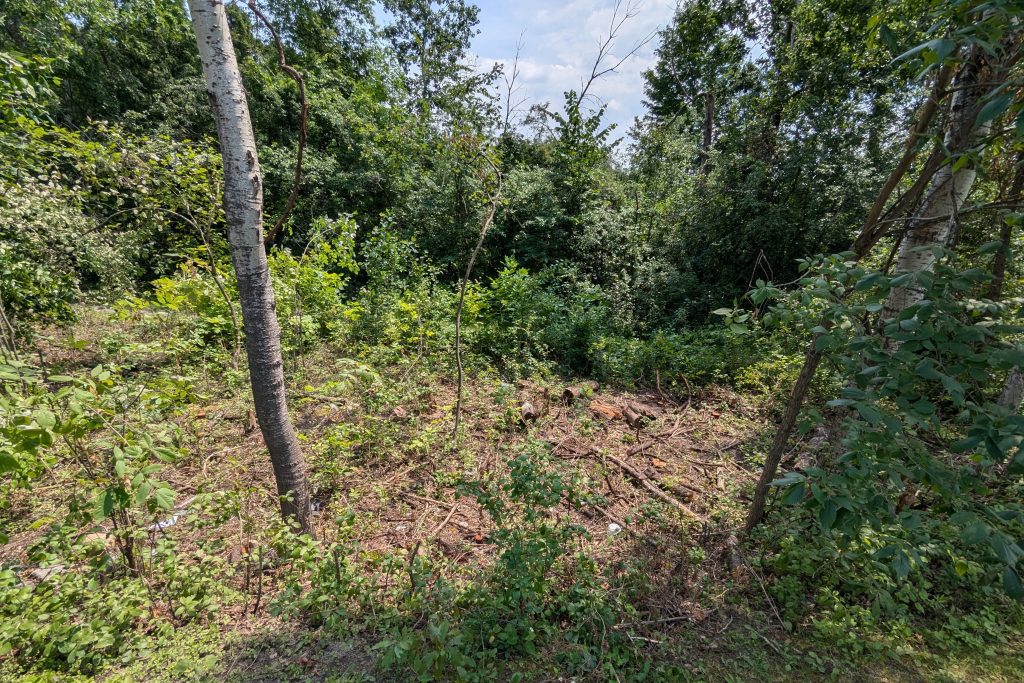
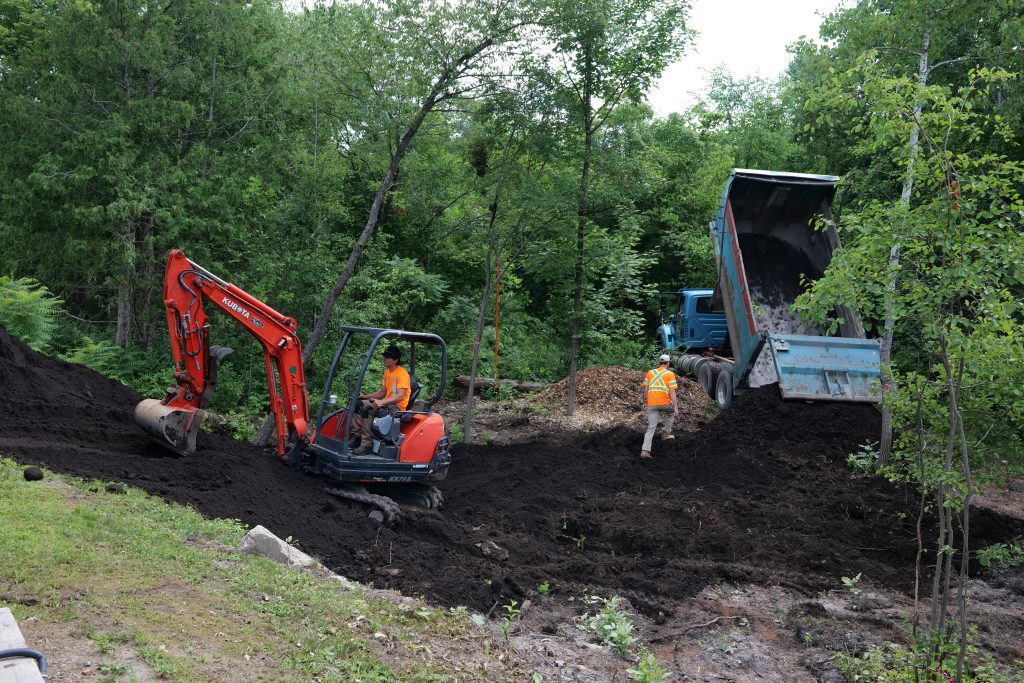
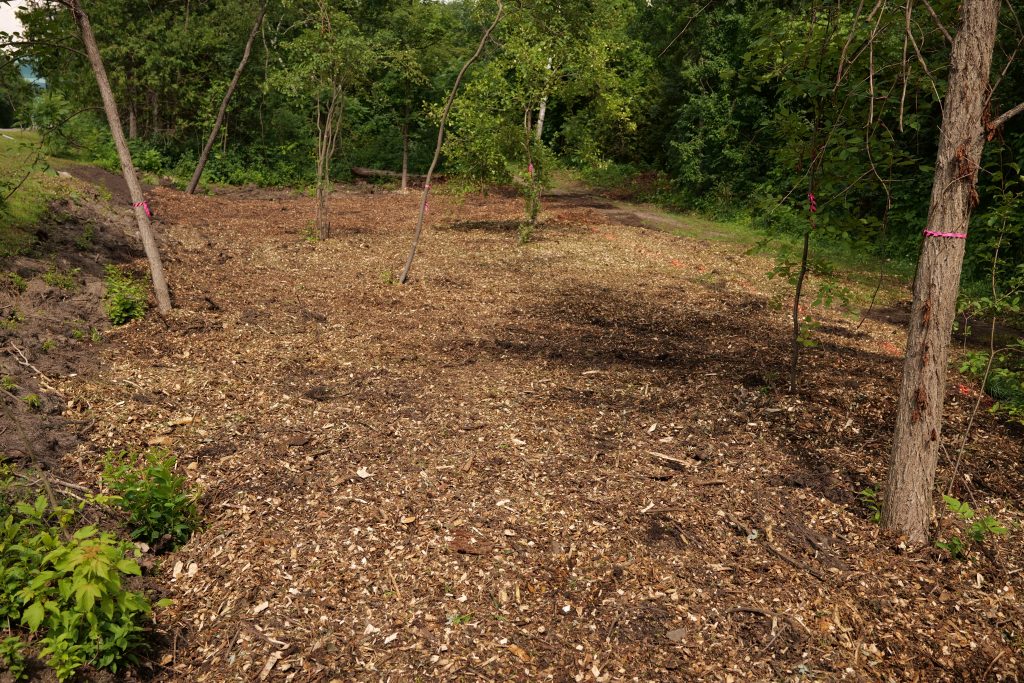
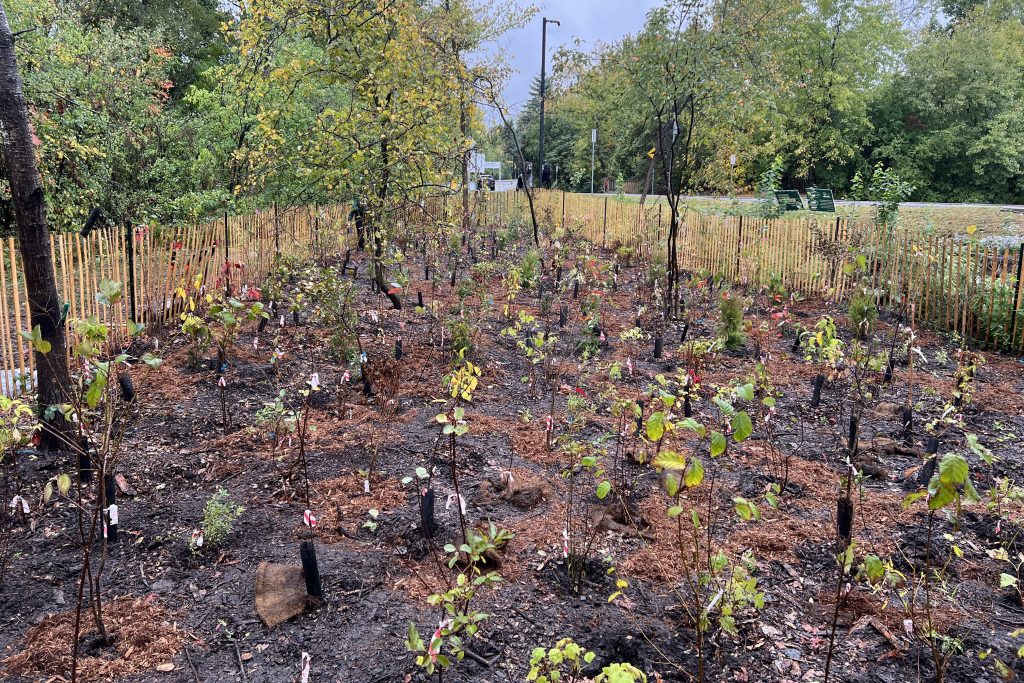
From left to right, top to bottom: Collège La Cité Tiny Forest 1) before planting, 2) during excavation and amendment, 3) after mulching, and 4) after planting.
In conclusion…
The goal of the Miyawaki method is to create a healthy, thriving forest at – ecologically speaking – near-breakneck speed. The recovery of topsoil was described by Miyawaki himself as “necessary” in order to recreate the deep, nutrient-rich soil of a mature forest floor. In a retrospective review of the method’s effectiveness, he emphasized that “diverse quasi-natural forests in a shorter period is attained from dense, mixed planting of main and companion tree species from the potential natural vegetation, following the system of natural forests with much care for soil conditions”. By carefully preparing soil following the principles Miyawaki outlined, FCF aims to give every Tiny Forest the best chance to establish quickly, grow densely, and sustain itself. Soil preparation isn’t an optional step in the process; it’s the essential foundation for forests that thrive and endure for generations to come.
“Restoration and regeneration of ecologically diverse forests is inevitable for citizens in every region to survive in the next century, and the next millennium.”
– Akira Miyawaki,
from Restoration of living environment based on
vegetation ecology: Theory and practice